
ETIAS is an electronic travel authorization, not a visa. Citizens of 59 visa-exempt countries and territories (the US, the UK, Canada, Australia, Japan, most of Latin America…) will need it for short stays of up to 90 days.
It will cost €20, last 3 years and you'll apply online. It isn't running yet and has no official start date.
ETIAS in a nutshell
ETIAS stands for European Travel Information and Authorisation System. It's a pre-travel check: before you board, the system screens your details against European security databases. If everything's fine, you get your authorization by email and it's linked to your passport.
It doesn't replace border checks: ETIAS lets you board, but the border officer still makes the final call on letting you in.

What it costs. Free if you're under 18 or over 70.

How long it lasts, or until your passport expires if sooner.

Maximum stay within any 180-day period.

Start date: the EU will announce it several months ahead.
Who will need it?
You'll need ETIAS if all three apply:
- You're not a citizen of the EU or of another European country that requires ETIAS (or Ireland).
- Your nationality is one of the 59 visa-exempt ones (US, UK, Canada, Australia, Mexico, Brazil…).
- You don't hold a residence permit or long-stay visa from a country that requires ETIAS.
If your country needs a Schengen visa (India, China or South Africa, for example), you'll keep applying for the visa: ETIAS isn't for you.
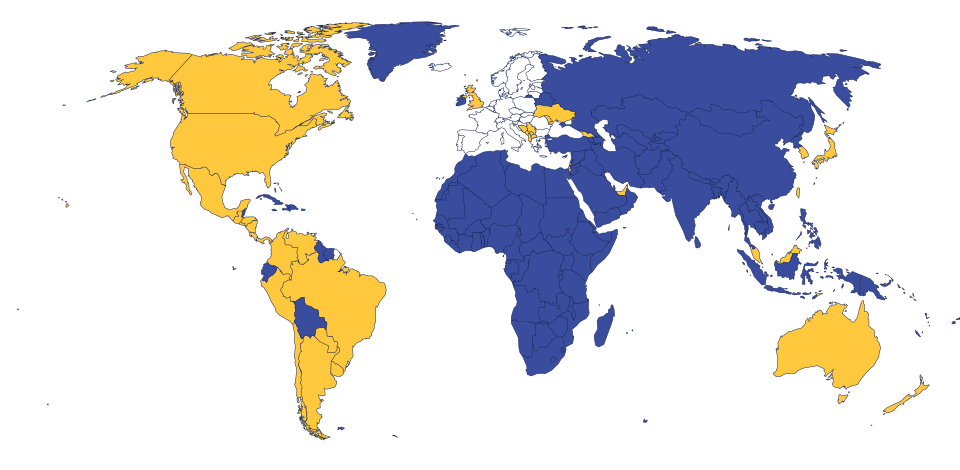
The 30 countries that will require it
The 29 Schengen countries plus Cyprus. Ireland and the UK don't use ETIAS: they have their own rules.
How applying will work
It'll be 100% online, on the official website travel-europe.europa.eu or in the official app. You fill in a form, pay €20 and, in most cases, get an answer within minutes.

Fill in the form
Passport details, contact info, education, job and a few security questions.
Pay €20
Online. Free if you're under 18 or over 70.

Get it by email
Usually within minutes; at most 96 hours unless they ask for more info.

Off you go!
It's linked to your passport for 3 years. At the border you're registered in the EES.
When does it start?
Right now there's no official date. The official website says ETIAS is "currently not in operation" and that the EU will announce the date "several months prior to its launch". What is already live is the EES, the biometric border check.
We track the date every day on When does ETIAS start?
The European Commission proposes ETIAS (November 2016).
Regulation (EU) 2018/1240 is adopted.
The planned date moves several times.
The EES (biometric register) starts on 12 October.
The EES is fully live from 10 April.
ETIAS still has no official date.
ETIAS doesn't guarantee entry
An approved ETIAS lets you board your flight, bus or ship, but it is not a right to enter. At the border, officers still check your passport, your reasons for travelling, where you will stay and whether you have enough money. If you don't meet the entry conditions, you can be refused entry even with a valid ETIAS.
That's why we also cover what border officers ask for and the money each country requires.
ETIAS vs the US ESTA and the UK ETA
ETIAS is Europe's version of the authorizations the United States and the United Kingdom already use. They work in a similar way but are separate: one does not replace the other.
| ETIAS (Europe) | ESTA (USA) | ETA (UK) | |
|---|---|---|---|
| Countries | 30 European countries | United States | United Kingdom |
| Fee | €20 | US$40 | £20 |
| Validity | 3 years | 2 years | 2 years |
| Status | Not live yet | Live | Live |
All three end early if your passport expires. See ETIAS vs ESTA and the UK ETA.
What happens if you travel without ETIAS?
Once ETIAS is mandatory, airlines, bus and ferry companies must check that you hold a valid authorization before you board. Without one, they will deny boarding. The EU has announced a transition period after launch during which travellers are informed and, in some cases, can still enter without ETIAS; its exact length will be confirmed together with the start date.
Checklist before you book a trip to Europe
- Your passport is valid for 3 months after you leave Europe and was issued less than 10 years ago.
- Your nationality is on the visa-exempt list (or you have a Schengen visa).
- You have counted your days with the 90/180 calculator.
- Once ETIAS launches: apply on the official site before buying non-refundable tickets.
Frequently asked questions
Is ETIAS a visa?
No. It's a travel authorization for people who don't need a visa. It's simpler, cheaper and done online.
Do I need to apply for ETIAS now?
No. ETIAS isn't running and nobody can process it today. If a site charges you for it now, it's a middleman or a scam.
How long can I stay in Europe with ETIAS?
Up to 90 days within any 180-day period, adding up all Schengen countries. Cyprus is counted separately.
Can I work or study with ETIAS?
Not work. Short courses (under 90 days) are fine. For longer studies or work you need a national visa.
How does ETIAS work?
You fill in an online form with your passport details, answer a few security questions and pay €20. The system checks your data against European databases and, in most cases, approves it within minutes. The authorization is linked to your passport for 3 years.
Do Americans need ETIAS in 2026?
Not yet. ETIAS has no start date, so US citizens currently travel to Europe with just their passport. Once ETIAS launches, they will need it. ETIAS for US citizens.
What date will ETIAS start?
There is no official date. The EU will announce it several months in advance. Follow the start date.
Do I need a visa to travel to Europe?
Not if you are from one of the 59 visa-exempt countries and territories (the US, UK, Canada, Australia, Japan, most of Latin America…) and stay up to 90 days in any 180. Use the checker to confirm.
Keep reading
Sources
- European Commission: official ETIAS website
- European Commission: who should apply for ETIAS
- European Commission: ETIAS FAQ
- Regulation (EU) 2018/1240 (ETIAS)
- U.S. CBP: ESTA
- GOV.UK: Electronic travel authorisation (ETA)
This guide is independent and for information only. Rules can change: before you travel, always double-check on the official ETIAS website and with the authorities of the country you're visiting.